Aceto Balsamico Tradizionale di Modena DOP (Traditional Balsamic Vinegar of Modena) is distinct from the far more widely available commercial balsamic vinegar in almost every production characteristic. The traditional product is governed by a product specification that mandates grape varieties, cooking methods, a specific ageing structure using a battery of progressively smaller wooden barrels, a minimum ageing period that can exceed 25 years, and a sealed bottling system controlled by the Consortium.
Grape Varieties and the Starting Material
The specification defines the starting material as cooked grape must (mosto cotto) made from grapes grown in the Modena production zone. The permitted varieties include Lambrusco, Sangiovese, Trebbiano, Albana, Ancellotta, Fortana, and Montuni. This list reflects the historically cultivated varieties of the Modena plains and foothills, not a selection for any specific flavour compound.
Harvested grapes are pressed and the resulting must is cooked in open vessels at temperatures that cause significant reduction — the must may reduce to a fraction of its original volume through evaporation of water. This cooking step concentrates sugars, acids, and flavour compounds, and it distinguishes traditional production from the industrial process, which does not require cooked must as a starting point.
The Battery Ageing System
The defining feature of traditional production is the battery system (batteria): a series of wooden barrels of progressively decreasing volume, each made from a different type of wood. A typical battery consists of five to seven barrels ranging from roughly 60–70 litres at the large end to 10–15 litres at the small end. The wood types used across a battery typically include oak, chestnut, mulberry, cherry, juniper, and ash — each contributing different aromatic compounds to the vinegar over the course of its ageing.
The management of the battery involves annual transfers: once a year, a portion of vinegar is drawn from the smallest barrel for bottling or assessment. The smallest barrel is then replenished from the second-smallest, which is replenished from the third, and so on back through the series. Fresh cooked must is added to the largest barrel. This cascading transfer maintains a continuous ageing cycle and ensures that vinegar drawn from the smallest barrel has passed through the entire battery sequence.
Minimum Ageing and the Two-Grade Structure
The specification establishes two grades based on minimum ageing. The standard grade requires a minimum of 12 years in the battery. The extravecchio (extra-aged) grade requires a minimum of 25 years. In practice, because the battery system creates a blend of vintages rather than a single-vintage product, the age of any given bottling reflects the average time material has spent in the system, not a single defined vintage.
The 12-year and 25-year periods are measured from the time cooked must is first introduced to the battery, not from a calendar year reference. This means a battery must be in operation for at least 12 years before any vinegar can be drawn for assessment.
Sensory Evaluation by the Consortium
Before a producer can bottle and label vinegar as Aceto Balsamico Tradizionale di Modena DOP, the material must pass sensory evaluation by a panel convened by the Consorzio Produttori Aceto Balsamico Tradizionale di Modena. The evaluation assesses density (using a specific gravity threshold), colour, viscosity, and flavour — including the balance between sweetness and acidity and the complexity of the aromatic profile.
Vinegar that does not pass sensory evaluation cannot be bottled under the DOP name, regardless of its age. This evaluation step places significant authority in the Consortium's panel and means that technical compliance with ageing requirements is necessary but not sufficient for certification.
There is a second DOP for traditional balsamic vinegar from Reggio Emilia: Aceto Balsamico Tradizionale di Reggio Emilia DOP. The two specifications are similar in approach but differ in several technical details, including the bottle shape used for each designation.
The Sealed Bottle
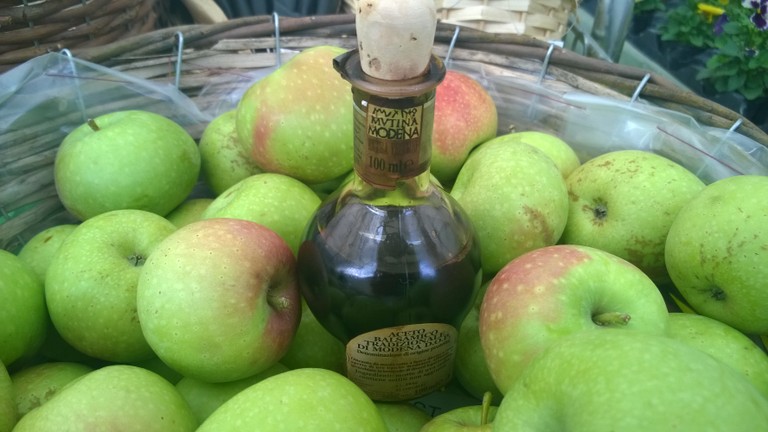
Certified vinegar is bottled exclusively by the Consortium in a standard 100ml bottle of a specific shape designed by Giorgetto Giugiaro. Producers submit their certified vinegar to the Consortium, which carries out the bottling under controlled conditions and applies the consortia's seal and numbered label. The producer does not bottle their own product independently; the bottling step is managed collectively.
The bottle shape is protected and may not be used for any other product. The numbering system on labels allows traceability back to the specific battery and production record from which the vinegar was drawn. The 25-year extravecchio grade is distinguished with a gold label on the same bottle form; the 12-year standard grade carries a cream/white label.
Distinction from Commercial Balsamic Vinegar
The commercial product — sold widely under the name Aceto Balsamico di Modena — holds a separate IGP registration and operates under a substantially different specification. It is not required to use cooked must as the primary ingredient, does not have mandatory minimum ageing in wooden batteries, and is produced in far larger volumes. The two products share a geographic name but are not comparable in method, timeline, or flavour profile. The naming distinction is important for labelling compliance: the traditional DOP may not be used on any product that does not meet the DOP specification, and the IGP name similarly cannot be applied to non-conforming products.
References
The product specification for Aceto Balsamico Tradizionale di Modena DOP is accessible through the EU Commission's eAmbrosia register. The Consorzio Produttori Aceto Balsamico Tradizionale di Modena publishes production guidelines and bottling procedures. For the IGP specification covering the commercial variant, a separate entry is available in the same register.