DOP & IGP — Italian Place-Based Goods

Origin, Quality Control, and Labelling of Italian Protected Products

An overview of the European Union certification schemes that govern how Italian regional foods earn and keep their geographical designations — from production rules to inspection procedures.

Updated: May 2026

Certification, Origin & Quality Control

Detailed reference articles on how Italy's most recognised DOP and IGP products are defined, produced, and verified under EU Regulation 1151/2012.

Parmigiano Reggiano DOP cheese wheel
DOP

Parmigiano Reggiano DOP: Origin Criteria and Inspection Chain

How the production zone boundary, breed restrictions, and bi-annual consortia inspections define one of Italy's most controlled cheese designations.

Read article →
Sliced Prosciutto di Parma DOP
DOP & IGP

DOP vs IGP: What the Labels Actually Mean

A practical breakdown of how Protected Designation of Origin differs from Protected Geographical Indication — and why the distinction matters for producers and buyers.

Read article →
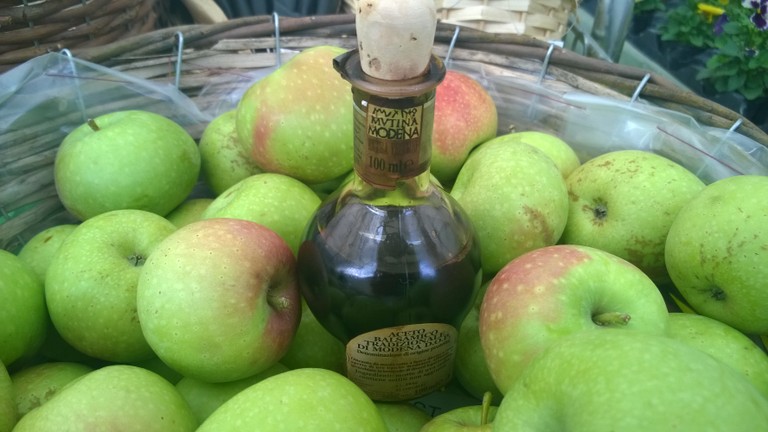
Traditional Balsamic Vinegar of Modena DOP
DOP

Aceto Balsamico Tradizionale di Modena DOP: A 25-Year Process

The barrel ageing sequence, sensory evaluation protocol, and the sealed bottling system that distinguish the traditional designation from commercial variants.

Read article →

Three Pillars of EU Quality Schemes

EU Regulation 1151/2012 establishes a framework that ties product identity to geography, tradition, and independent verification.

Geographical Origin

For DOP products, every stage — raw material sourcing, processing, and packaging — must occur within a defined geographic area. IGP requires at least one stage to be carried out in the designated zone.

Product Specification

Each designation is governed by a published product specification (disciplinare) that sets out ingredient rules, production methods, physical characteristics, and permitted labelling. Amendments require approval from the European Commission.

Third-Party Inspection

Certified control bodies — approved by the Italian Ministry of Agricultural, Food and Forestry Policies (MiPAAF) — conduct documented inspections at every stage of production. Non-conforming lots cannot carry the designation.

EU Registration

Registration in the EU's DOOR database grants legal protection across all member states. The DOP and IGP logos — introduced in 1992 and revised in 2012 — are uniform across EU markets.

Consortium Oversight

Producer consortia (consorzi di tutela) recognised by MiPAAF can regulate production volumes, manage promotional activities, and report suspected misuse to national and EU enforcement bodies.

Consumer Labelling

Products carrying DOP or IGP marks must display the EU logo and, where applicable, the consortia's own mark. The designation name must appear in the same visual field as the product name on packaging.

More on Italian Protected Products

Grana Padano DOP cheese
DOP

Grana Padano DOP

Produced across five northern Italian regions, Grana Padano DOP is one of the world's most consumed PDO cheeses. Its specification covers milk origin, curd cooking temperature, and minimum ageing periods of nine months for the base grade.

Pecorino Siciliano DOP cheese
DOP

Pecorino Siciliano DOP

Sicily's oldest documented cheese, referenced in classical sources. The designation covers raw sheep's milk from specific Sicilian breeds, traditional basket-moulding, and a minimum ageing of four months for the aged variety.

Contact

For questions about the content of this site, corrections to published information, or general correspondence regarding Italian DOP and IGP certifications.

Email: info@clearbrookmarket.eu

Domain: clearbrookmarket.eu

Last updated: May 2026

The content on this site is provided for general informational purposes. All product names and certification designations belong to their respective consortia and regulatory bodies. References to the European Union quality scheme are based on publicly available EU regulations.